
By Yelena Terushkin, PA-C — Skin Glow Dermatology
Melanoma is the most serious form of skin cancer, but when detected early, treatment outcomes are often excellent. Regular skin examinations, awareness of changing moles, and early evaluation of suspicious lesions remain some of the most important tools for protecting long-term skin health.
At Skin Glow Dermatology in Brooklyn, NY, we provide comprehensive melanoma skin cancer screening, diagnostic evaluations, and treatment planning for patients concerned about changing moles, unusual skin lesions, or elevated skin cancer risk. Insurance verification and self-pay options are available.
“Early detection is one of the most powerful tools we have against melanoma.”
— Yelena Terushkin, PA-C
✅ Quick Facts About Melanoma Skin Cancer Screening & Treatment in Brooklyn, NY
📞 Call Now: 718-814-8680 Or Visit our Contact Page
📍 Skin Glow Dermatology – 480 Court St, Suite #103, Brooklyn, NY 11231
Melanoma develops in melanocytes, the pigment-producing cells that give skin its color. Although melanoma is less common than many other forms of skin cancer, it has a greater potential to spread if left untreated.
An estimated 100,000+ new melanoma cases are diagnosed in the United States each year. When melanoma is detected at an early stage, treatment success rates are significantly higher, making routine skin examinations one of the most important preventive measures available.
Many melanomas begin as a new mole or as changes within an existing mole. This is why patients are encouraged to monitor their skin and seek evaluation when they notice changes in color, shape, size, or symptoms such as itching or bleeding.
Patients concerned about suspicious moles may also benefit from our Mole Check & Mole Removal Services and Total Body Skin Cancer Exams.
The earlier melanoma is identified, the more treatment options are typically available.
Routine skin cancer screenings can help identify suspicious lesions before they become more advanced. Patients with numerous moles, significant sun exposure, a family history of melanoma, or a personal history of skin cancer may benefit from regular dermatology examinations.
Early detection is not simply about finding cancer. It is also about creating peace of mind, monitoring changes over time, and helping patients make informed decisions about their skin health.
Melanoma can affect anyone, but certain factors may increase risk.
Common melanoma risk factors include:
Having risk factors does not mean you will develop melanoma, but it may increase the importance of regular skin cancer screenings and dermatology evaluations.
“Most dangerous skin cancers are highly treatable when found early. That’s why routine skin exams matter.”
— Yelena Terushkin, PA-C
One of the most effective ways to recognize suspicious moles is the ABCDE rule.
If you notice one or more of these warning signs, a professional skin evaluation is recommended.
Patients concerned about changing moles may also schedule a mole check and mole evaluation at Skin Glow Dermatology.
Many melanomas begin as a new skin lesion or develop from changes within an existing mole.
Potential warning signs include:
Not every unusual mole is melanoma, but professional evaluation helps determine whether additional monitoring or testing is needed.
Many patients first notice changes during routine self-examinations, which is one reason dermatologists encourage regular skin awareness.
Melanoma does not always develop on highly visible areas of the skin.
Some melanomas may appear in less obvious locations, including:
These hidden forms of melanoma can be more difficult to detect, which is why comprehensive skin examinations remain an important part of preventive dermatology care.
Patients with numerous moles, extensive sun exposure history, or elevated risk factors may benefit from regular Total Body Skin Cancer Exams for ongoing monitoring and prevention.
Melanoma diagnosis begins with a thorough skin examination.
During your appointment, your provider evaluates suspicious moles, skin lesions, and any areas of concern while reviewing your medical history, family history, and previous skin cancer diagnoses.
If a lesion appears atypical, additional evaluation may be recommended. Decisions are based on clinical appearance, symptoms, changes over time, and individual risk factors.
The goal is early identification and accurate diagnosis so that treatment can begin as quickly as possible when necessary.
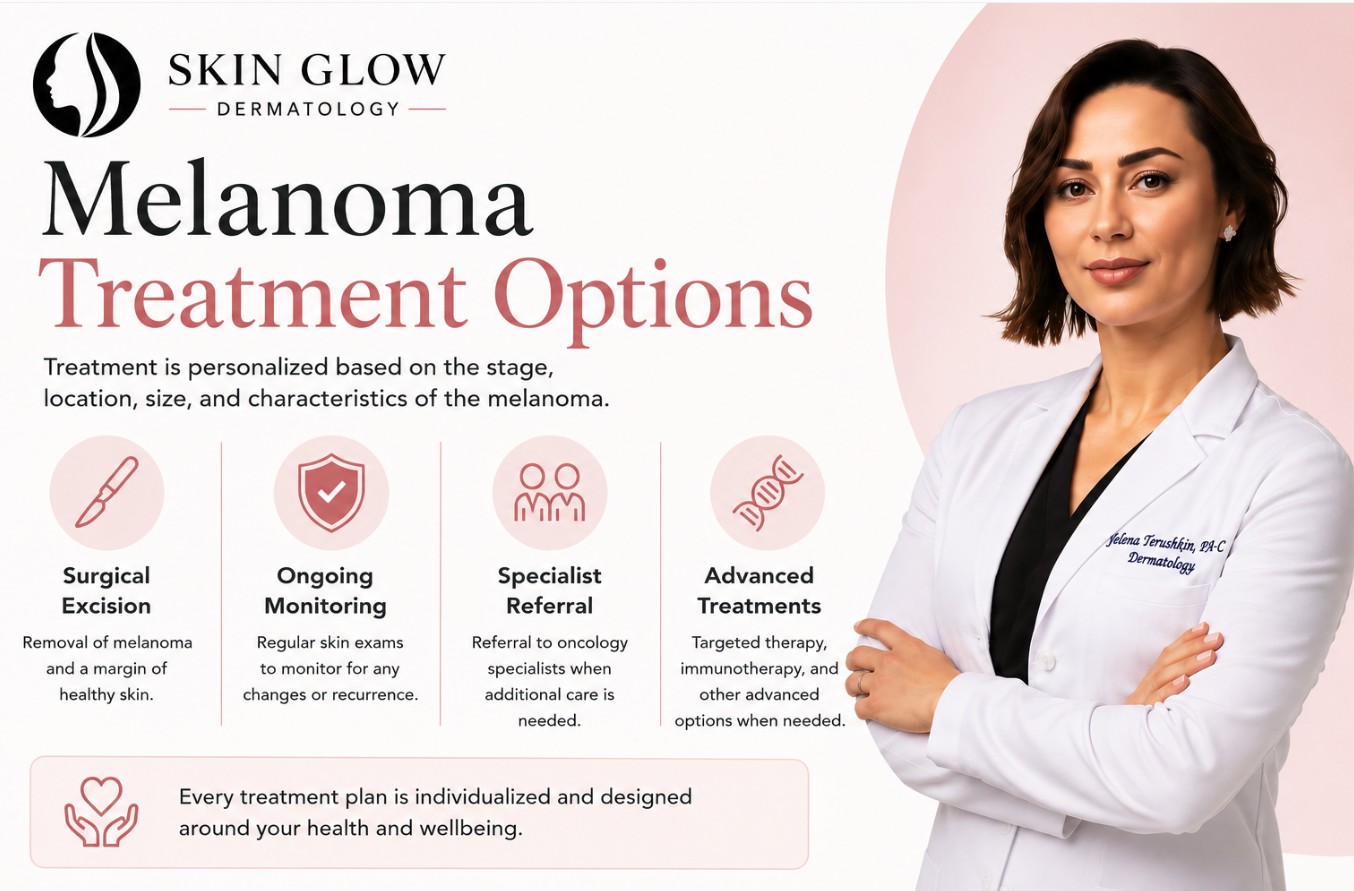
Treatment depends on the stage, location, size, and characteristics of the melanoma.
Depending on the diagnosis, treatment recommendations may include:
Every treatment plan is individualized and developed according to current clinical guidelines and patient-specific factors.
Patients diagnosed with other forms of skin cancer may also benefit from learning more about our non-melanoma skin cancer diagnosis and treatment services.
“A changing mole should never be ignored. When in doubt, have it checked.”
— Yelena Terushkin, PA-C
Many insurance plans cover medically necessary melanoma evaluations, skin cancer screenings, and dermatology visits related to suspicious moles or skin lesions.
Coverage varies depending on your insurance provider and individual policy. Our team can help verify benefits before your appointment.
For patients without insurance, Skin Glow Dermatology offers transparent self-pay options for consultations, skin examinations, and preventive skin cancer screenings.
Our goal is to provide access to timely skin cancer evaluation and dermatology care for patients with and without insurance coverage.
Actual costs may vary depending on the services provided and treatment recommendations.
Learn more about our insurance options and dermatology coverage information.
Research has identified an association between melanoma and breast cancer in some patients.
Individuals with a history of breast cancer may have a higher risk of developing melanoma, while some melanoma patients may also have increased risk factors for breast cancer.
Although one condition does not directly cause the other, this relationship highlights the importance of routine screenings, preventive care, and awareness of personal risk factors.
Patients with a personal or family history of cancer should discuss appropriate skin cancer screening schedules with their healthcare provider.
While not all melanomas can be prevented, reducing ultraviolet (UV) exposure remains one of the most effective ways to lower risk.
Healthy habits may include:
Prevention and early detection remain the most powerful tools for protecting long-term skin health.
“Most melanomas are first noticed by patients themselves. Knowing your skin and recognizing changes can make a meaningful difference.”
— Yelena Terushkin, PA-C
Patients throughout Brooklyn choose Skin Glow Dermatology for preventive skin cancer screenings, melanoma evaluations, and personalized dermatology care.
Whether you have a changing mole, family history of skin cancer, or simply want a preventive skin examination, our team is here to help.
Call 718-814-8680 or Book Online to schedule your consultation.
• ✨Melanoma is the most serious form of skin cancer and benefits from early detection
• ✨Changing moles should be evaluated promptly by a dermatology provider
• ✨The ABCDE rule can help identify suspicious skin lesions
• ✨Routine skin cancer screenings may improve early diagnosis
• ✨Insurance verification and self-pay options are available at Skin Glow Dermatology
Melanoma may appear as a new mole or as changes within an existing mole. Warning signs include asymmetry, irregular borders, color variation, growth, itching, or bleeding.
Many patients benefit from annual skin examinations, while individuals with higher risk factors may require more frequent evaluations.
Many insurance plans cover medically necessary skin cancer screenings and dermatology evaluations. Coverage varies by insurance provider and policy.
Yes. Melanoma can develop on the palms, soles, under nails, mucosal surfaces, and other areas not regularly exposed to sunlight.
Skin Glow Dermatology provides melanoma screenings, mole evaluations, skin cancer exams, and preventive dermatology care in Brooklyn, NY.
Still have questions about melanoma, skin cancer screening, or suspicious moles? Below are answers to some of the most common questions our Brooklyn patients ask during their dermatology visits.
Yelena Terushkin, PA-C provides medical dermatology care focused on skin cancer screening, mole evaluations, melanoma prevention, and personalized treatment planning.
Educational Purposes Only: Content on this site is for information only and is not a substitute for professional medical advice, diagnosis, or treatment. Emergencies: If you have a medical emergency, call 911 immediately. Never delay seeking professional care due to information found on this website.


